


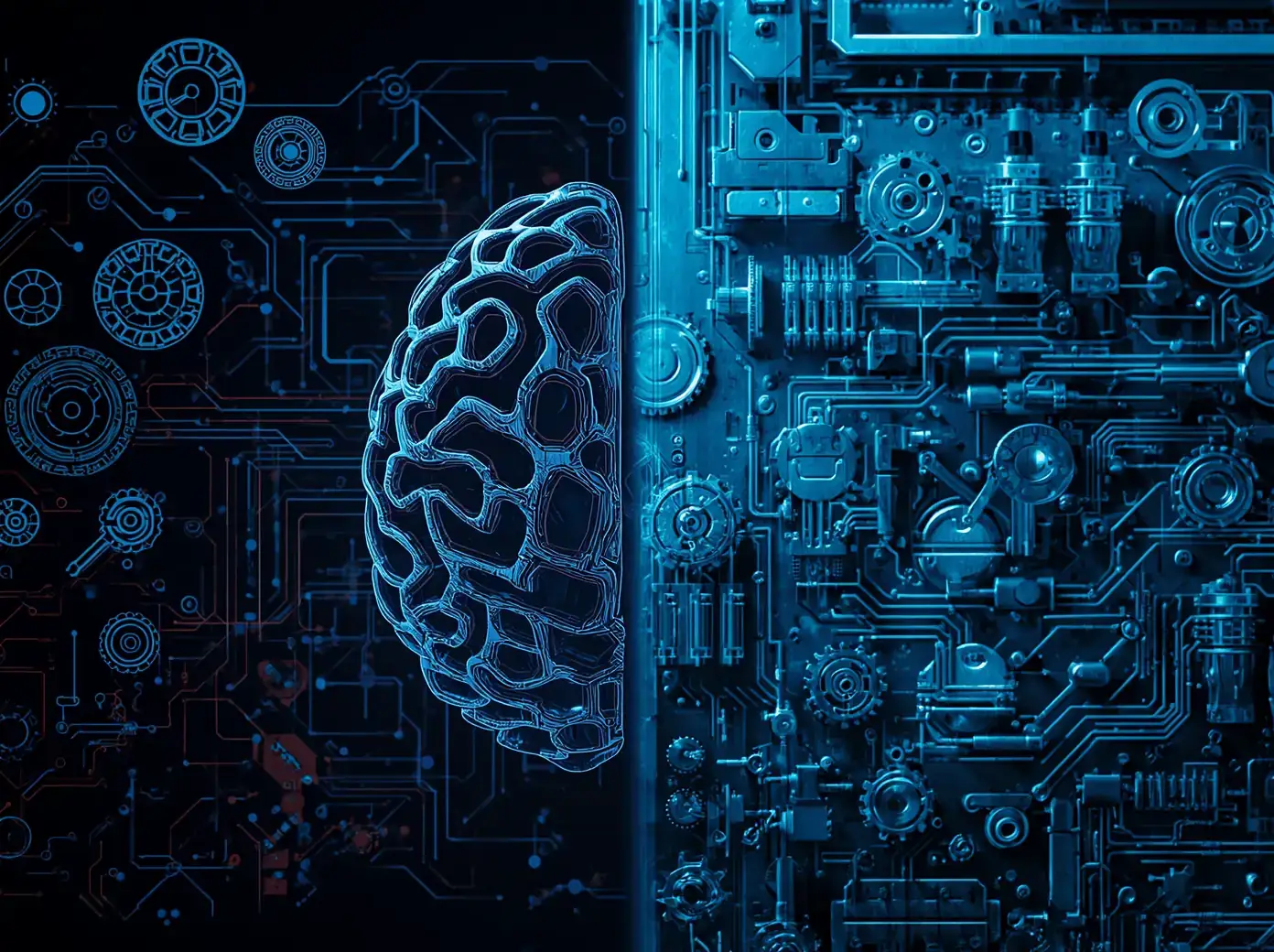
When Artificial Intelligence (AI) emerged, it was hailed as a productivity revolution—a universal solution to eliminate manual, tedious work. The dazzling promise was a future of intelligent, autonomous systems managing the “administrative friction” of modern life.
However, the reality years later is one of widespread professional frustration. While AI excels as a sophisticated formulating and research tool (generating text, analyzing data, drafting code), it remains a powerful engine disconnected from the gears of execution. The core truth is: AI without robust, integrated automation delivers minimal repeatable transformation to daily workflows. It is a brilliant mind with its hands tied.
The Core Misalignment: Intelligence vs. Action
The primary need for knowledge workers is the radical reclamation of time, which is aggressively consumed by an unending volume of repetitive, low-value administrative tasks.
Automation is the tangible solution to this time drain, translating AI’s intelligence from insightful suggestions into practical, background efficiency.
A critical flaw exists in the current technological ecosystem: most powerful automation tools are not native to the operating system or the web browser. They are siloed applications requiring cumbersome setup, brittle integration layers (APIs), and constant manual maintenance. This lack of native integration severely limits AI’s potential to act on its insights, effectively trapping its power within its own interface, unable to move fluidly across the modern desktop environment.
The Vision: An Intelligent Overlayer
What is truly needed is not just another application, but an intelligent overlayer operating seamlessly and ubiquitously across the entire digital workspace—the OS, browser, email client, and calendar. This is the missing link to transform AI from a smart assistant into a genuinely autonomous agent.
Imagine this single AI and Automation entity—a Digital Chief of Staff—working invisibly with deep context awareness and proactive execution:
| Feature | Description | Impact on Productivity |
| Intelligent Email Prioritization | Sorting, classifying, and flagging emails based on learned habits, business context, inferred urgency, and project status, not just keywords. | Reduces time spent sifting; ensures critical communications are seen instantly. |
| Proactive Workspace Setup | Operating as a persistent overlayer in the browser, it accesses all frequently used websites, logs in, and opens the required set of tabs (e.g., Jira, Salesforce) right off the bat every morning without a specific command. | Eliminates the 5-10 minutes of “digital friction” required to start the workday. |
| Behavioral Task Creation | Implicitly learning from interactions (e.g., detecting a commitment made in an email) and automatically drafting and assigning a task in the relevant project management system. | Closes the gap between communication and action; prevents tasks from being forgotten. |
| Real-time Communication Refinement | Automatically rewriting or adjusting the tone of text as you type, proactively suggesting clearer phrasing or correcting grammar without needing an explicit prompt. | Enhances communication quality and speeds up drafting time without interrupting flow. |
| Calendar Event Autonomy | Scanning received meeting request emails, identifying details (dates, attendees, agendas), and creating a draft calendar event for simple user approval. | Eliminates manual data entry for scheduling and speeds up coordination. |
The Current Pitfalls: Explicit Interaction and Errors
Today’s tools fall short of this vision because they are stubbornly explicit. They require the user to stop, copy content, navigate to the AI tool, issue a prompt (“Summarize this”), and then copy the result back. This breaks concentration and negates supposed time savings.
Furthermore, complex, multi-application actions often result in frequent mistakes or errors due to a lack of deep integration (e.g., reading a Slack message and reliably updating Trello). This forces the user back into a supervisory role, fostering mistrust and cementing the perception that AI is a formulating toy, not a dependable colleague.
The Call for Native Integration and Trusted Autonomy
For AI to fulfill its early promise, the industry must pivot from mere intelligence toward integrated autonomy. We need secure, foundational, and deeply embedded automation capabilities, not brittle external add-ons.
Until AI stops being a separate, highly-intelligent application and starts being an invisible, pervasive, and perfectly integrated layer that can securely access, interpret, and execute across the entire digital environment, it will remain a powerful, yet limited, formulating tool. The ultimate frontier for AI is no longer about thinking better; it’s about seamlessly doing better.
The Trust Crisis Undermining the Vision
The aspiration for truly profound digital integration—envisioning AI as a “Digital Chief of Staff” embedded into the core of existence—collides head-on with the systemic and accelerating erosion of user trust.
This vulnerability is rooted in the current data economy, where the continuous streams of user data (content, behaviors, metadata) are routinely and opaquely repurposed, often for corporate profit (hyper-targeting) or, increasingly, as an enabler of mass surveillance.
This environment has fundamentally altered the relationship between the individual and the machine. The trust required to hand over the keys to a “Digital Chief of Staff”—granting omnipresent access to sensitive communications, financial, and health data—is simply absent.
Users are logically reluctant to empower an invisible, black-box algorithmic layer with such profound autonomy when the tech behemoths operating the machine have repeatedly failed to prove themselves trustworthy stewards of existing, more limited datasets. The calculus is simple: why grant ultimate access when the machine’s primary function is perceived to be less about service and more about comprehensive data extraction and control? Until systemic issues of data governance, transparency, and accountability are definitively resolved, the dream of total, seamless AI integration will remain perpetually undermined by a justified and profound lack of trust.